Archives

ILEP and the Universal Periodic Review

What it is

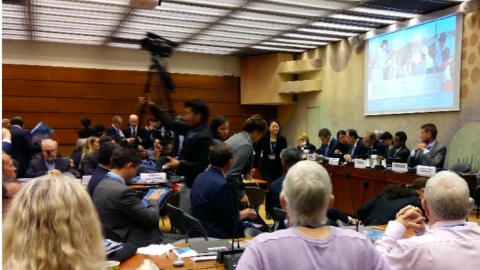
The Universal Periodic Review (UPR) is the mechanism by which the UN Human Rights Council assesses the human rights record of every UN member country, over a five-year cycle. The purpose is to improve the human rights situation on the ground. This link, including a short video, provides a good overview.  The UPR aims to cover the totality of the human rights situation in a country. ILEP aims, where possible, to submit reports to the UPR because we want to ensure that leprosy and disability are strongly featured there. If our reports make a good impression, along with appropriate lobbying of the Permanent Missions in Geneva, then the final recommendations made by state parties at the Human Rights Council are more likely to include disability and leprosy.

What we do

ILEP has collaborated in reports to the UPR on Sierra Leone, Nepal, Myanmar, Mozambique and – most recently – Papua New Guinea (PNG). In most of these cases the report was specifically about the human rights situation related to leprosy, and was usually written in collaboration with a national organisation of persons affected by leprosy. The PNG report went further. This was a collaboration between The Leprosy Mission, two PNG coalitions of persons with disabilities, and ILEP. The report contains recommendations about access to justice, equality before the law, rights of women with disabilities, right to education, right to health, access to employment, participation in cultural and social life, accessibility in general, and public awareness raising. The report is on the ILEP website.

What we are learning

Geoff Warne (ILEP CEO) recently interviewed Natalie Smith, country leader of The Leprosy Mission PNG, who had led the process of consultation and development of the report. This was a good achievement and we hope that the PNG experience will inspire other ILEP members who are thinking about how to produce or collaborate in reports for countries in which they are working. The following paragraphs are a summary of Natalie’s key points of advice.

Don’t leave it too late

Natalie recommends starting the process three months before the deadline. It takes time to plan what is needed, coordinate meetings with stakeholder groups such as DPOs, look at what happened as a result of previous UPR recommendations, discuss the key human rights issues affecting persons with disabilities and persons affected by leprosy, and come up with recommendations. Plenty of time is also needed for the final writing, review and editing of the report.

Respect the stakeholders

The two leading national DPOs in PNG were key stakeholders. Their engagement was essential but could not be taken for granted. TLM organized three meetings over two months, in pleasant surroundings, and although enthusiasm dwindled over time, the input from the DPO representatives was invaluable. They knew how things really were ‘on the ground’ and what the key barriers were, and they were able to provide real-life case studies which are very much valued in the UPR reports. Other persons with disabilities, who were not DPO representatives but who had good knowledge and linkages, also gave valuable input.

Start with reports from the previous UPRs

UPRs are undertaken every five years and the final reports by the Human Rights Council are readily available. When providing reports into the UPR process, NGOs are urged to highlight areas where the government has not, or not adequately, followed the recommendations. So the PNG group started by looking at all the recommendations related to disability or leprosy in the 2011 and 2016 reviews, and discussing what the government had, or had not done, in response to the recommendations. The PNG group also looked at recommendations in previous reports that were not specifically about leprosy or disability but which might have linkages, for example recommendations on violence against women, police brutality, sorcery, and shame-related issues.

Look at other publications

Other evidence and data should also be considered. The PNG group looked at:

  • UN human rights conventions or treaties the government had signed up to, that might be relevant to disability and leprosy (examples: CRPD Convention, Convention on Rights of the Child, International Covenant on Civil and Political Rights, CEDAW Convention)
  • the annual Human Rights Watch reports on human rights violations regarding women, children and persons with disabilities
  • legislation related to persons with disabilities and/or leprosy, and major legislative gaps
  • national development plans relevant to disability or leprosy
  • national disability policy or strategy
  • UN disability factsheets
  • World Report on Disability (WHO and World Bank)

The ILEP Secretariat can assist with identifying and providing links to many of these documents.

Use the CRPD Convention as a framework for the report

The paragraphs of the Convention on the Rights of Persons with Disabilities (CRPD) cover the main aspects of human rights protection for persons with disabilities. Moreover, DPOs are usually familiar with the CRPD (or, if not, they benefit from looking closely at what it says). So the PNG group looked at the main headings in the Rights section of the CRPD and, when they had something to say about those topics and some real-life examples or case studies, they used the headings as the framework or structure for their report.

Work together on the recommendations

Recommendations in UPR reports are about what the government should do to improve the human rights environment in the country. Well-thought and well-framed resolutions, supported by factual information and case studies, are the most important feature of the report. The PNG group brainstormed recommendations arising from their discussions and their review of previous UPR recommendations and other publications.

Make sure that a capable writer is available

A good writer from the TLM International Office was available. The PNG team used a spreadsheet to list recommendations, references, supporting evidence and case studies or examples, and the writer used these as the basis for the first draft. The final report was ten pages long and contained 29 recommendations. The ILEP Office recommends looking at this report as a potential model, but not seeing it as a target: some other UPR reports are shorter.

It was worth doing

At the outset the task seemed very big but once the stakeholders were together and a structure had been decided upon, it became more straightforward. In addition to the production of the UPR report, it was a very good way for an ILEP member to work with the DPOs and other in-country stakeholders.
Building resilience in the face of discrimination

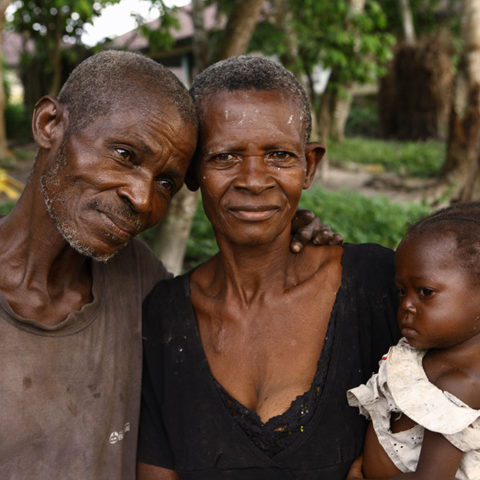
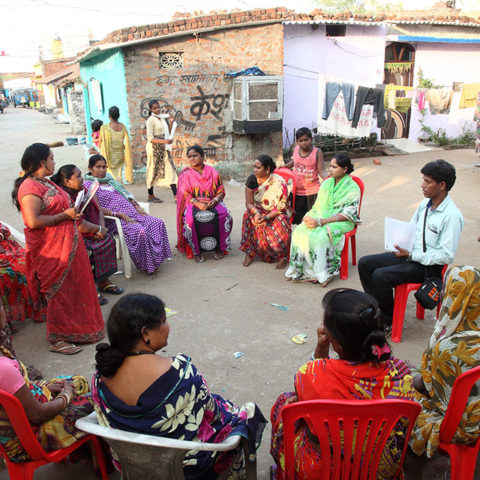
In 2018 ILEP gained funding from the Leprosy Research Initiative (LRI) for a study entitled ‘Promoting inclusion where it matters most: Building resilience in individuals and families’. Though leprosy and leprosy-related stigma or discrimination can have a major impact on psychosocial wellbeing, there is also evidence that persons affected by leprosy can overcome experiences of discrimination and exclusion, and in doing so they demonstrate numerous dimensions of resilience.  So the study investigated whether efforts to strengthen individual and family resilience would enable people to better address stigma and discrimination.

Concept and design

The study was initiated and led by Zoica Bakirtzief da Silva Pereira (currently a member of the ILEP Advisory Panel), Anna van’t Noordende (now with NLR) and Pim Kuipers (former ILEP staff member). They designed a ten-week resilience development programme, along with a manual, and piloted it in collaboration with staff from ILEP members in two quite different contexts in India. These were an urban slum in Hyderabad, in association with ILEP member Fontilles, and a rural tribal area in Odisha, in association with ILEP member Lepra.

The programme was undertaken in family settings, and the participants were people with personal experience of leprosy and their family members. To make the concept of resilience more meaningful to the participants, bamboo was chosen as an emblem of the programme, with the catch-phrase: ‘being strong and bouncing back like the bamboo in a storm’. The content of the programme covered four main themes: strong roots of the bamboo plant (knowledge), strong trunk (thoughts and behaviour, positive self-view), strong branches and leaves (beliefs, faith and knowledge of rights), and strong soil (relationships within and beyond the family, and social support).

Results

The results of the study were published in April 2021. The ten-week course was well-received by the individuals and families. The ILEP member staff involved in the programme were very supportive: for them, it seems to have been a valuable entry point into a deeper understanding of psychosocial issues in leprosy. The effects of the programme on the two communities, measured through resilience and quality of life questionnaires, were markedly different. The rural community in Odisha demonstrated significant gains in resilience, whereas the urban slum community in Hyderabad did not. Both communities had markedly higher quality of life scores after the programme.

The full report includes some very thoughtful analysis of why the results were different. We recommend a close reading of that analysis. It is a useful reminder of the way in which events and circumstances outside of a programme or intervention can have a dramatic effect on results.

Next steps

The authors conclude that this 10-week family-based intervention is feasible and has the potential to improve resilience and quality of life. There are fruitful subjects for further research coming out of the study – for example, the inter-relationship between resilience and religious belief. They note that the 10-week programme is one of the first interventions designed to strengthen psychosocial resilience of persons affected by NTDs such as leprosy in a developing country context. They recommend a larger-scale trial to determine the effectiveness and long-term sustainability of the intervention.

ILEP statement of commitment to the participation of persons affected by leprosy

This statement is also available in French, Spanish and Portuguese.

BACKGROUND

The involvement of communities and persons affected is not a new concept in primary health care and disease programs. Human rights-based approaches to NTDs, including leprosy, emphasise that any interventions should be based on the principles of participation, non-discrimination and accountability[1]. WHO has issued specific Guidelines for strengthening participation of persons affected by leprosy in leprosy services[2]. However, the active participation of persons affected by leprosy is not always a reality.

THE EASI STRATEGY 

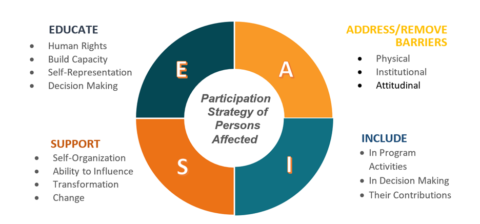
Engaging persons affected by leprosy is essential to the success of leprosy programs. Having experienced the disease, disability and associated discrimination, they have a unique voice and perspective, they bring passion to the work and take the programs closer to the communities they are designed to benefit. ILEP and its Members adopt the EASI strategy to ensure that persons affected by leprosy have the space and the support for meaningful and effective participation.

ILEP COMMITMENT  

In relation to the EASI strategy, and within their sphere of influence, ILEP and its Member associations commit to work towards the following outcomes:

  • Policy-making: Persons affected by leprosy are supported to participate in the development, monitoring and evaluation of leprosy-related policies, guidelines and preferred practices at all levels.
  • Programs: Persons affected by leprosy systematically participate in all stages of leprosy programs from planning, to implementation, monitoring and evaluation. Their knowledge, skills, experience and connections are valued in these roles.
  • Leadership, networking and sharing: Persons affected by leprosy are supported to take on leadership roles in self-care groups, support groups and other relevant local, national and international networks; to seek resources and build local capacity; to encourage participation of new members; and to share their experience with others.
  • Advocacy: Persons affected by leprosy actively participate in advocacy for participation of persons affected, human rights, the removal of all discriminatory laws, regulations and practices and universal access to quality services that are fully integrated into strengthened local health systems;
  • Public representation: Persons affected by leprosy are supported to actively participate at local, regional and global fora and to become spokespersons in leprosy and related campaigns or speakers at public events.
  • Research: Persons affected by leprosy are supported to participate in the planning and execution of leprosy-related research
  • Gender: Specific attention is paid to ensuring equal participation by women affected by leprosy in each of these actions

Download PDF


[1] A human rights-based approach to neglected tropical diseases. World Health Organisation, 2010 http://www.who.int/neglected_diseases/Human_rights_approach_to_NTD_Eng.pdf.

[2] https://apps.who.int/iris/bitstream/handle/10665/205169/B4726.pdf?sequence=1&isAllowed=y

Déclaration d’engagement de l’ILEP à la participation des personnes affectées par la lèpre

Cette déclaration est également disponible en anglais, espagnol et portugais.

CONTEXTE

La participation des communautés et des personnes affectées n’est pas un concept nouveau dans les programmes de soins de santé primaires et de maladies. Les approches fondées sur les droits de l’homme à l’égard des MTN, y compris la lèpre, soulignent que toute intervention doit être fondée sur les principes de participation, de non-discrimination et de responsabilité.[1] L’OMS a publié des directives spécifiques pour renforcer la participation des personnes affectées par la lèpre dans les services lèpre.[2]  Cependant, la participation active des personnes affectées par la lèpre n’est pas toujours une réalité.

LA STRATÉGIE EASI

La participation des personnes affectées par la lèpre est essentielle au succès des programmes lèpre. Ayant fait l’expérience de la maladie, d’invalidité et de discrimination associée, ils ont une voix et une perspective uniques ; ils apportent de la passion au travail et rapprochent les programmes des communautés dont ils sont censés bénéficier. L’ILEP et ses Membres adoptent la stratégie EASI pour s’assurer que les personnes affectées par la lèpre ont l’espace et le soutien nécessaires pour une participation significative et efficace.


  • Eduquer : droits de l’homme, renforcement des capacités, autoreprésentation, prise de décision
  • Soutenir : auto-organisation, capacité d’influencer, transformation, changement
  • Aborder/éliminer les obstacles : physiques, institutionnels, comportementaux
  • Inclure : dans les activités du programme, dans la prise de décision, leurs contributions

ENGAGEMENT DE L’ILEP

En ce qui concerne la stratégie EASI, et dans leur sphère d’influence, l’ILEP et ses associations membres s’engagent à travailler pour les résultats suivants:

  • Élaboration des politiques : Les personnes affectées par la lèpre sont soutenues pour participer à l’élaboration, au suivi et à l’évaluation des politiques, directives et pratiques préférées liées à la lèpre à tous les niveaux.
  • Programmes : Les personnes affectées par la lèpre participent systématiquement à toutes les étapes des programmes lèpre, de la planification à la mise en œuvre, au suivi et à l’évaluation. Leurs connaissances, leurs compétences, leur expérience et leurs liens sont valorisées dans ces rôles.
  • Leadership, réseautage et partage : Les personnes affectées par la lèpre sont soutenues pour assumer des rôles de leadership au sein de groupes d’autosoin, de groupes de soutien et d’autres réseaux locaux, nationaux et internationaux pertinents; pour rechercher des ressources et renforcer les capacités locales; pour encourager la participation de nouveaux membres; et de partager leur expérience avec d’autres.
  • Plaidoyer : Les personnes affectées par la lèpre participent activement au plaidoyer pour la participation des personnes affectées, aux droits de l’homme, à la suppression de toutes les lois, réglementations et pratiques discriminatoires et à l’accès universel des services de qualité complétement intégrés dans les systèmes de santé locaux renforcés.
  • Représentation publique : Les personnes affectées par la lèpre sont soutenues pour participer activement aux forums locaux, régionaux et mondiaux et à devenir des porte-parole de la lèpre et des campagnes connexes lors d’événements publics.
  • Recherche : Les personnes affectées par la lèpre sont soutenues pour participer à la planification et à l’exécution de la recherche liée à la lèpre.
  • Genre : Une attention particulière est accordée à l’égalité de participation des femmes affectées par la lèpre à chacune de ces actions.

Télécharger PDF


[1] Une approche fondée sur les droits de l’homme à l’égard des maladies tropicales négligées. Organisation mondiale de la Santé, 2010 http://www.who.int/neglected_diseases/Human_rights_approach_to_NTD_Eng.pdf.

[2] https://apps.who.int/iris/bitstream/handle/10665/205169/B4726.pdf?sequence=1&isAllowed=y


Declaração de compromisso da ILEP com a participação das pessoas afetadas pela Hanseniase

Esta declaração também está disponível em inglês, francês e espanhol.

Contexto

O envolvimento das comunidades e das pessoas afetadas não é um conceito novo nos programas de atenção primária à saúde e  às doenças. Abordagens baseadas em direitos humanos para as DTN, incluindo a hanseníase, enfatizam que quaisquer intervenções devem ser baseadas nos princípios de participação, não discriminação e responsabilização. [1]A OMS emitiu diretrizes específicas para o fortalecimento da participação das pessoas afetadas pela hanseníase nos serviços de hanseníase.[2]  No entanto, a participação ativa das pessoas afetadas pela hanseníase nem sempre é uma realidade.

A Estratégia  EASI

As pessoas afetadas pela hanseníase são essenciais para o sucesso dos programas de hanseníase. Tendo experimentado a doença, a deficiência e a discriminação associada,  elas têm uma voz e perspectiva únicas, trazem paixão ao trabalho e levam os programas mais próximos das comunidades que são projetados para beneficiar. A ILEP e seus integrantes adotam a estratégia E para garantir que as pessoas afetadas pela hanseníase tenham espaço e apoio para uma participação significativa e eficaz.

  • Educar: Direiros Humanos, Capacitação, Auto- representação, Decisão
  • Apoiar: Auto-organização, Habilidade de influenciar, Transformação, Mudança
  • Suplantar Barreiras: Fisica, Institucional, Atitudinal
  • Incluir: Atividades dos programas, Decisões, Suas contribuições

COMPROMISSO DA ILEP

Em relação à estratégia EASI e dentro de sua esfera de influência, a ILEP e suas associações-membro comprometem-se a trabalhar para os seguintes resultados:

  • Formulação de políticas : As pessoas afetadas pela hanseníase são apoiadas a participar do desenvolvimento, monitoramento e avaliação de políticas, diretrizes e práticas preferidas relacionadas à hanseníase em todos os níveis.
  • Programas: Pessoas afetadas pela hanseníase participam sistematicamente de todas as etapas dos programas de hanseníase desde o planejamento, até a implementação, monitoramento e avaliação. Seus conhecimentos, habilidades, experiência e conexões são valorizados nessas funções.
  • Liderança, networking e compartilhamento: As pessoas afetadas pela hanseníase são apoiadas ao assumir papéis de liderança em grupos de autocuidado, grupos de ajuda mútua e outras redes locais, nacionais e internacionais relevantes; buscar recursos e construir capacidade local; incentivar a participação de novos membros; e compartilhar sua experiência com outros.
  • Advocacy: As pessoas afetadas pela hanseníase participam ativamente da defesa da participação das pessoas afetadas, dos direitos humanos, da remoção de todas as leis, regulamentos e práticas discriminatórias e do acesso universal a serviços de qualidade totalmente integrados aos sistemas locais de saúde reforçados;
  • Representação pública: As pessoas afetadas pela hanseníase são apoiadas a participar ativamente em eventos locais, regionais e globais para se tornarem porta-vozes em hanseníase e campanhas relacionadas ou palestrantes em eventos públicos.
  • Pesquisa: Pessoas afetadas pela hanseníase são apoiadas para participar do planejamento e execução de pesquisas relacionadas à hanseníase.
  • Gênero: Atenção específica é dada para garantir a igualdade de participação das mulheres afetadas pela hanseníase em cada uma dessas ações.

Baixar PDF


[1] Uma abordagem baseada em direitos humanos para doenças tropicais negligenciadas. Organização Mundial da Saúde, 2010 http://www.who.int/neglected_diseases/Human_rights_approach_to_NTD_Eng.pdf.

[2] https://apps.who.int/iris/bitstream/handle/10665/205169/B4726.pdf?sequence=1&isAllowed=y

Declaración del compromiso de ILEP para las participacion de las personas afectadas por lepra

Esta declaración también está disponible en inglés, francés y portugués.

ANTECEDENTES

La participación de las comunidades y personas afectadas no es un concepto nuevo en la atención sanitaria primaria y programas de enfermedades. Los planteamientos basados en derechos humanos hacia ETDs incluyendo lepra, enfatizan que cualquier interacción debe estar basada en los principios de participación, no-discriminación y responsabilidad.[1] La OMS ha publicado Directrices específicas para consolidar la participación de las personas afectadas por la lepra en los servicios de la lepra.[2] Sin embargo, la participación activa de las personas afectadas por la lepra no es siempre una realidad.

LA ESTRATEGIA EASI

  • Educar: Derechos Humanos, Capacitación, Auto-representación, Toma de decisiones
  • Soporte: Auto-organización, Capacidad de influencia, Transformación, Cambio
  • Abordar/eliminar barreras: Fisicas, Institucionales, Actitudinales
  • Incluir: En actividades de programa, En la toma de decisiones, En sus aportaciones.

Compromiso ILEP

En relación a la estrategia EASI y dentro de su área de influencia, ILEP y sus miembros asociados se comprometen a trabajar hacia los siguientes resultados:

  • Toma de decisiones: Se apoya a las personas afectadas por lepra para participar en el desarrollo, control y evaluación de las políticas relacionadas con la lepra, directrices y prácticas preferentes a todos los niveles.
  • Programas: Las personas afectadas por la lepra sistemáticamente participan en todas las fases de los programas de lepra desde planificar, implementar, controlar y evaluar. Se valoran sus conocimientos, capacidades, experiencia y relaciones en estos papeles.
  • Liderazgo, red de contactos y participación: Se apoya a las personas afectadas por lepra para que asuman sus tareas de liderazgo en los grupos de auto-cuidado, grupos de apoyo y otras importantes redes de tipo local, nacional e internacional, para buscar reuniones y crear capacidad local, animar a participar a nuevos miembros y a compartir sus experiencias con otros.
  • Defensa: Que las personas afectadas por lepra participen activamente en la defensa de todas las personas afectadas, los derechos humanos, la abolición de todas las leyes discriminatorias, regulaciones y prácticas con acceso universal a servicios de calidad plenamente integrados en sistemas sanitarios locales consolidados.
  • Representación pública: Se apoya a las personas afectadas por la lepra a participar activamente para ser portavoces sobre lepra en foros locales, regionales y globales y en campañas relacionadas o ponentes en eventos públicos.
  • Investigación: Se apoya que las personas afectadas por lepra participen en la planificación y puesta en práctica de investigaciones relacionadas con la lepra.
  • Género: Se presta especial atención para asegurar la participación igualitaria de las mujeres afectadas por lepra en cada una de estas acciones.

Descargar PDF


[1] Aproximación a las Enfermedades Tropicales Desatendidas basadas en los Derechos Humanos. Organización Mundial de la Salud, 2010 http://www.who.int/neglected_diseases/Human_rights_approach_to_NTD_Eng.pdf.

[2] https://apps-who.int/iris/bitstream/handle/10665/205169/B4726.pdf?sequence=1&isAllowed=y


WHO Global leprosy strategy 2021–2030

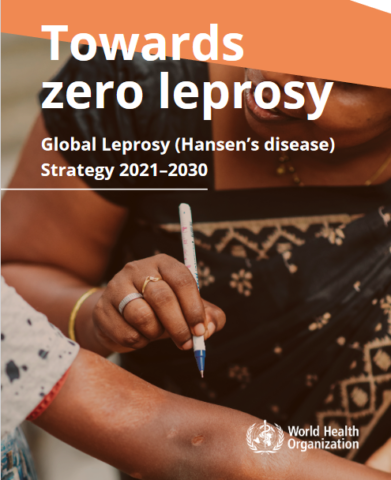
The new WHO global leprosy strategy, entitled ‘Towards Zero Leprosy’, was released on 15th April. This is one of the disease-specific strategies underpinning the WHO Road map for NTDs 2021–2030. The strategy presents the basic direction, goals, challenges and strategic pillars at a global level. National NTD and leprosy programmes are urged to adopt it and to adapt its strategic pillars to their country context. This is a crucial document for ILEP and its member associations, and for all partners working in leprosy.

Vision, goal and targets

‘Towards Zero Leprosy’ is defined in the strategy’s long-term vision as zero infection and disease, zero disability, zero stigma and discrimination. The medium-term goal is the elimination of leprosy, defined as interruption of transmission, and a WHO working group has been developing definitions around this during recent months. It is not expected that this goal will be achieved globally by 2030, though a further 86 countries are expected to do so. The four high-level 2030 targets are:

  • 120 countries reporting zero new autochthonous cases.
  • 70% reduction in annual number of new cases detected.
  • 90% reduction in rate per million population of new cases with grade-2 disability.
  • 90% reduction in rate per million children of new child cases with leprosy.

These are set out in more detail in the table below.

Indicator

2019

(reported)

2020

(projected)

2023

(milestone)

2025

(milestone)

2030

(target)

Number of countries with zero new autochthonous cases 34 (18%) 50 (26%) 75 (39%) 95 (49%) 120 (62%)
Number of new cases detected (disaggregated by sex and age) 202,256 184,000 148,000 123,500 62,500
Rate (per million population) of new cases with grade-2 disability 1.40 1.30 0.92 0.68 0.12
Rate (per million children) of new child cases with leprosy 7.83 7.81 5.66 4.24 0.77

Strategic pillars

To achieve these targets, the strategy incorporates four strategic pillars, each with a number of key components and a set of relevant indicators. The strategic pillars are:

  1. Implement integrated, country-owned zero leprosy roadmaps in all endemic countries.
  2. Scale up leprosy prevention alongside integrated active case detection.
  3. Manage leprosy and its complications and prevent new disability.
  4. Combat stigma and ensure human rights are respected.

The first, third and fourth headings are broadly similar to the three pillars of the previous strategy, though there is new material in each case. For example, Pillar 1 now has recommendations to form national partnerships for zero leprosy and multi-stakeholder zero leprosy roadmaps, a reflection of the emergence of the Global Partnership for Zero Leprosy. It also has much stronger reference to data quality, and now includes the monitoring of adverse drug reactions. Pillar 3 includes a section about mental wellbeing and counselling, on which the previous strategy was silent, along with more specific material around self-care. Pillar 4 gives emphasis to the Principles and Guidelines for elimination of discrimination against persons affected by leprosy and their family members, with the full text of the Principles and Guidelines in an appendix, and explains the importance of including leprosy into national human rights policy frameworks.

Pillar 2 is new in that, alongside ongoing active case detection, it adds the scaling up of leprosy prevention in line with the recommendation in the 2018 WHO Guidelines for the diagnosis, treatment and prevention of leprosy. It also refers to the potential of existing or new vaccines, which were not part of the picture when the previous strategy was written.

Aside from what is new in the strategic pillars, there are distinct differences in some of the language, which is consistent with the change in focus in the WHO Road map for NTDs. For example, although the previous strategy referred to the mainstreaming of leprosy within primary and secondary healthcare systems, the new strategy refers constantly to leprosy services being integrated with other health services and, particularly, with other skin NTDs.

The strategy also includes a set of sixteen research priorities for this strategic period, and emphasises that global and national investment in research are essential to achieving zero leprosy.

Adoption and adaptation of the strategy

It is likely that ILEP members working closely with national leprosy control programmes will be asked to advise and support Ministries of Health on the implications of the new strategy for national leprosy and NTD programmes. Five years ago, some countries simply adopted the strategic targets and pillars of the previous strategy as their own country strategy, but the WHO Global Leprosy Programme advises against that. It points out that the 2030 targets in the strategy are global targets. Countries need to set targets that are relevant to their own leprosy situation and baseline data, in order to contribute to the achievement of global targets.

The strategic pillars have been written so as to be relevant to both higher-endemic and lower-endemic settings. However, countries (and ILEP members that are advising them) should closely examine the strategic pillars and the detailed components and content that underlies the pillars, and determine what is relevant for progress towards the country’s own leprosy and NTD targets.

The ILEP Office intends to host online workshops to give ILEP member staff the opportunity to ‘unpack’ the NTD Roadmap and the Global Leprosy Strategy and explore their implications in greater depth.

ILEP’s response to the Global Leprosy Strategy

ILEP has appreciated the opportunities for input into the strategy development process and welcomes the close integration between the NTD Road map and the Global Leprosy Strategy. ILEP also applauds the improvements over the previous strategy. The 2021-2030 strategy is more comprehensive, and ILEP members have appreciated the increased emphasis on integration, the focus on country ownership for sustainability, the inclusion of mental wellbeing, and the repeated references to involvement of persons affected by leprosy. However, no strategy is perfect. Some ILEP members would have liked to see a stronger focus on gender equity, a more thorough research section, and clearer references to logistics including MDT supply, given the supply issues over the past twelve months. There is also concern among some ILEP members over the redefined ‘elimination’ goal and the accuracy of the baseline numerical data.

Report on the human rights status of persons affected by leprosy and disability in Papua New Guinea

ILEP partnered with The Leprosy Mission PNG and two local coalitions of persons with disabilities in this submission to the 39th cycle of the Universal Periodic Review, with recommendations to uphold and protect the rights of persons affected by leprosy and persons with disabilities in Papua New Guinea.

The right to work

ILEP recently contributed to discussions by the CRPD Committee (Convention on the Rights of Persons with Disabilities) about the right to work. The Committee is developing a binding General Comment on Article 27 of the Convention. Article 27 is to do with various aspects around the right of persons with disabilities (including persons affected by leprosy) to get into paid work and remain in work. This is a significant issue for people affected by leprosy, who face a range of barriers to employment. Some of the barriers are unique to leprosy, so ILEP asked the Committee to include specific reference to leprosy in its General Comment.

Discriminatory laws

ILEP drew the Committee’s attention to the fact that, amongst the 130 published laws that discriminate against persons affected by leprosy, 25 relate to employment. These include laws in India (22), Thailand, Pakistan and the Bahamas. Typically, the laws bar persons affected by leprosy from obtaining work permits, from gaining certain sorts of employment-related licenses, and from holding certain types of jobs. ILEP is adamant that these laws need to be modified or repealed without delay. More positively, Vietnam, Tanzania, Colombia and Bangladesh present examples of laws that encourage and support the rights of persons affected by leprosy.

Harassment

ILEP described to the Committee how people affected by leprosy are liable to harassment in employment settings when and if their previous experience of leprosy is revealed. This harassment is amplified in cases of intersectionality – that is, where a person’s vulnerability due to the label of ‘leprosy’ is compounded by other vulnerabilities such as gender, race, age, mental health status or degree of physical impairment.

Self-help groups and livelihoods

ILEP member associations are engaged in many countries in forming and supporting self-help groups. Many groups embark on small savings schemes, and these savings along with external seed funding may be deployed into loans that enable group members – either as individuals or as a cooperative cluster – to invest in livelihood development. Livelihood decisions are usually vetted by the group, which increases the probability of success. ILEP outlined to the Committee the empowering effects of self-help and microfinance programmes. These include:

  • Reduction in stigma and social exclusion
  • Opportunities for self-employment
  • Inclusion within financial systems
  • Food security, especially where microfinance enabled people to engage in agriculture.
  • Education, where participants can earn the income needed to pay for children’s education.
  • Improved overall health standard, associated with having the money to pay for medicines, improved quality nutrition and more frequent meals.

However, persons with disabilities are over-represented among those that earn their living through self-employment, especially in the informal sector. ILEP told the Committee that this factor is even more pronounced for leprosy, since negative attitudes to the disease hold young people affected by leprosy back from both educational attainment and employment. As long as the livelihoods of persons affected by leprosy remain predominantly in the informal sector, their rights are not acknowledged and they are therefore vulnerable to abuse. Efforts are needed to move people affected by leprosy to the formal economy.

Vocational training

Vocational training, both institutional and community-based, can become a lifeline especially for young people who have found that discrimination has resulted in a low level of education but who want to enter employment in the formal economy. ILEP supported the Committee’s call on governments to enable persons with disabilities to access mainstream vocational and skills development programmes, but pointed out that as a result of low educational attainment and anti-leprosy prejudice, this mainstreaming is often not possible for young people affected by leprosy. Some ILEP member associations have invested heavily in bespoke vocational training programmes for the benefit of young men and women with personal experience of leprosy or from leprosy-affected households, or with other disabilities.

ILEP shared some of the key learnings from evaluations of its members’ vocational training programmes, which have demonstrated the need for:

  • Advocacy with schools to ensure children from leprosy-affected backgrounds are not disadvantaged in schooling.
  • Advocacy with mainstream vocational training providers to counter discriminatory attitudes towards student applicants.
  • Placement activities, which are needed because the attitudinal barriers are so great that even fully certificated vocational training, on its own, may not be enough.
  • Continuous scanning of the market to align job training, life-skills development and placement with the emerging external opportunities. This needs to be accompanied with ongoing relationships with key commercial/industrial sectors.
  • Post-placement mentoring and alumni associations.
  • Ongoing action towards the goal of remuneration levels for female graduates being commensurate with males, whether as employees or as self-employed entrepreneurs.

Employer advocacy

Many employers, reflecting attitudes in the community, discriminate against potential employees from leprosy-affected backgrounds. ILEP highlighted the need for determined advocacy towards policy-makers and employers to remove the attitudinal barriers that prevent so many people affected by leprosy from obtaining jobs, and assert their right to move into work and to stay in work. If efforts towards employment are not accompanied by intensive efforts at education and awareness of the workforce, the patterns of exclusion and harassment are likely to be repeated. ILEP supported the Committee’s recommendation of special programmes targeting persons with intellectual and psychosocial disabilities and other especially marginalised groups, and asked the Committee to explicitly state that these marginalised groups include people affected by leprosy.

Reasonable accommodation

ILEP welcomed the Committee’s intention to make an explanatory comment about reasonable accommodation – the responsibility of the employer to make adjustments that enable a person affected by leprosy to work successfully. One of the effects of nerve damage caused by leprosy is loss of feeling in hands and feet, which leads to damage unless the person learns vigilance. ILEP member associations offer physio and occupational therapy, training in self-care and advocacy for or provision of certain aids and appliances that enable the individual to function independently and maintain employment. ILEP commented that, in many cases, reasonable accommodation involves relatively low-cost provision of protective footwear and gloves or other simple devices that enable anaesthetic hands to be used for employment without damage.

Inter-relationship of human rights of persons affected by leprosy

ILEP commented that, for people affected by leprosy, the right to work is intrinsically connected to other rights in the CRPD Convention, such as the general right to non-discrimination, right to freedom from all forms of violence, right to inclusion in the community, right to education, right to health and healthcare, right to rehabilitation, and right to social protection. ILEP emphasised the pervasive effect of leprosy-related stigmatisation and discrimination on the enjoyment not only of the right to work, but of all of these rights and freedoms.

ILEP submission in relation to CRPD Committee’s draft General Comment on Article 27

This submission drew the Committee’s attention to leprosy-specific issues related to the right to work and commented on the draft General Comment from a leprosy perspective. It urged the Committee to explicitly reference leprosy in its final draft.

ILEP statement on impact of COVID-19 on persons affected by leprosy, to opening CRPD Committee session

This statement summarised the results of a survey of organisations of persons affected by leprosy about the impact of the pandemic and drew particular attention to intersectionality, where vulnerability caused by leprosy worsens, and is made worse by, other vulnerabilities.

WHO NTDs Roadmap 2021-2030

The WHO Neglected Tropical Diseases (NTDs) Roadmap 2021-2030 was launched at the end of January after a long period of international consultation. There is an abbreviated version of the Roadmap, but we recommend the full version as well as the NTD Sustainability Framework, a companion document.

The Roadmap is exceptionally important for leprosy. The major themes, especially the cross-cutting approaches of integration, mainstreaming, country ownership and sustainability, form a new landscape for ILEP’s strategies and activities. The Roadmap also has four detailed pages of specific objectives and approaches for leprosy, which form the basis for the new WHO Global Leprosy Strategy, due to be launched in March.

Accelerate programmatic action

This is the first of the major themes in the Roadmap. There is an emphasis on the need for research and development into new interventions and new tools. For leprosy, three critical actions are listed:

  • Update country guidelines to include use of single-dose rifampicin for postexposure prophylaxis for contacts, and advance research on new preventive approaches.
  • Continue investment into research for diagnostics for disease and infection, and develop surveillance strategies, systems and guidelines for case-finding and treatment.
  • Ensure medicines supply, including access to MDT, prophylactic drugs, second-line treatments and medicines to treat reactions; monitor adverse events and resistance.

Intensify cross-cutting approaches

This is the second major theme. The Roadmap promotes a shift is from a siloed disease-specific approach to cross-cutting approaches, including integration across multiple NTDs, mainstreaming in national health systems, and coordination with other sectors within and beyond health.

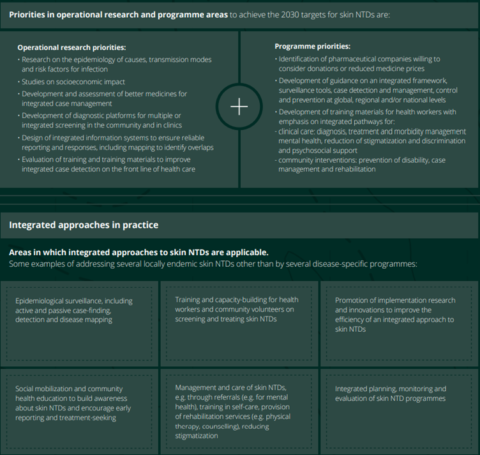
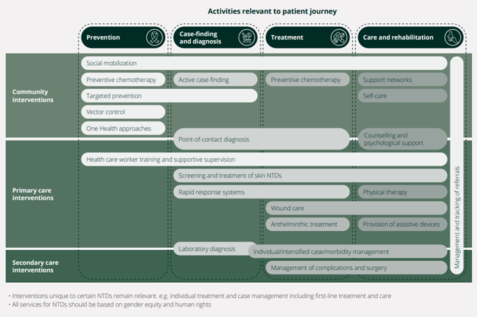
For leprosy, one fundamental issue is integration. The Roadmap encourages countries to integrate all NTDs on to a single platform that includes not only prevention but also treatment, care, rehabilitation and health education. There is a particular emphasis on integrating the eight skin NTDs: Buruli ulcer, leishmaniasis, leprosy, LF, mycetoma etc, onchocerciasis, scabies and yaws. One of the indicators in the Roadmap is the number of countries that implement integrated skin NTD strategies (currently 4, but the target is 40) so it can be assumed that leprosy-endemic countries will be urged by WHO to consider this. Figure 1 below shows some of the ways in which WHO expects that leprosy services will be integrated with other skin NTDs.

Figure 1

Mainstreaming in national health systems is another feature that is relevant in situations where leprosy programmes are implemented separately, or in parallel, with the country’s mainstream health system. The Roadmap is clear that NTD interventions, from prevention to diagnosis, treatment, care and rehabilitation, should be delivered through community, primary or secondary care facilities in the national health system. This contributes to sustainable, efficient NTD prevention and control and – in line with universal health coverage – it enables NTD patients to access all aspects of treatment, care and support. In many countries, health systems strengthening will be essential, otherwise the risk is that mainstreaming reduces patients’ access to leprosy and other NTD services. Figure 2 below describes how this mainstreaming could work in practice, though details would differ from country to country.

Figure 2

There is also emphasis on coordination with other departments in the Ministry of Health, and other sectors beyond it. For leprosy, some of the obvious intersections within Health are mental health, disability and inclusion, and eye health. There are other coordination opportunities beyond Health, including WASH, education, and justice and social welfare (particularly important for preventing structural discrimination including abolition of discriminatory laws, and working with communities to conduct anti-stigma interventions).

Country ownership

The third major theme is a shift is from an agenda driven by partner support and donor funding, to country ownership and (primarily) domestic financing. The sustainability framework is an important document in this regard, because it describes the crucial ongoing role of INGOs like ILEP in a context of country ownership.

The framework defines sustainability as ‘the ability of national health systems to maintain or increase effective coverage of interventions against NTDs to achieve the outcomes, targets and milestones identified in the new road map for 2030.’ To build sustainability, not only will NTD programmes need to be built upon national health systems, but also international donors and implementing partners will need to consider their potential roles in sustainability and especially in strengthening health systems. When countries depend on partners for NTD-specific expertise and funding, there is a risk of fragmentation, usually inadequate focus on health systems strengthening, and chronic uncertainty over whether partner funding will continue. The framework also raises the issue of power: who decides how NTD interventions are organised and implemented?

Partners like ILEP and its member associations are urged to use the framework to think through some of the deeper issues on sustainability. In particular, we are encouraged to identify opportunities in which technical assistance and funding assistance can be used, and possibly redirected, to better support sustainability.

Uniting to Combat NTDs

Uniting to Combat NTDs was established after the signing of the London Declaration on NTDs in 2012. During 2020, as part of a total review of structure and strategy, Uniting expanded its focus from 10 to all 20 NTDs. One facet of the new structure is a consultative forum, which includes Dr Wim van Brakel, chair of the ILEP Technical Commission.

Uniting’s new mission is to create political will and an enabling environment for countries to achieve the WHO NTD road map targets and deliver the SDG goal to end NTDs by 2030. Recognising that there are many organisations working in the NTD ‘space’, UTC wants to add value in four ways:

  • providing a platform for collective advocacy
  • facilitating communications and active partnership across all the NTDs
  • being a trusted and credible voice to open doors at the international level
  • using its power to convene partners across and beyond NTDs to raise the profile of NTDs globally

The new strategy ‘Coming together to end the neglect’ has three main aims.

The first is to increase the relevance of NTDs in global and regional agendas. This includes using existing frameworks to provide accountability for policy and funding commitments, cultivating endemic country leaders as champions for NTDs, and working with partners to build strong campaigns to influence new and existing donors and endemic countries.

The second aim is to mobilise national and international resources for NTDs. This includes not only ongoing commitments from key NTD donors and the pharmaceutical industry, but also additional resources from key international donors, the private sector, and foundations. In line with the NTD Roadmap, there is also a focus on promoting inclusion of NTDs in endemic countries’ domestic health funding.

The third aim is to facilitate an engaged partnership to support NTDs. This involves working closely with NTD partner networks, like ILEP, to share information and create a unified voice throughout the NTD community, make connections among partners for collective advocacy and resource mobilisation, and collaborate so as to magnify partners’ own advocacy and resource mobilisation efforts.

A summary of the strategy can be read here. ILEP appreciates the particular capabilities that Uniting to Combat NTDS brings to the NTD world, especially towards building stronger international collaborations and mobilising new resources. ILEP looks forward to engaging with Uniting towards our mutual objectives.

Interim Advice on the use of Rifampicin for post-exposure prophylaxis (PEP)

Issued by the ILEP Technical Commission, February 2021. This is a non-technical version of the advice. The full version is available here.


Various problems have affected the supply of MDT this year. The most recent has been the discovery of impurities, known as nitrosamines, in rifampicin. The discovery came through a new drug screening process recommended by WHO. Nitrosamines appear to be a by-product in the production of rifampicin and have probably been present for many years.

Nitrosamines are assumed to pose a health risk if a high enough cumulative amount is consumed over a person’s lifetime. For this reason, they are not considered a serious issue when used for treatment with MDT (normally one dose a month for up to 12 months) or for leprosy prevention as SDR-PEP (one single dose). The US Food & Drug Administration (FDA) and the European Medicines Agency (EMA) have both indicated that rifampicin should continue to be used to treat TB (where it is given daily) and leprosy, while the manufacturing process is revised to minimise the impurities. However, no statements have been made about rifampicin use for SDR-PEP.

In line with the statements from FDA and EMA about MDT, the ITC considers the potential health risk of a single dose of rifampicin to be extremely small. However, since SDR-PEP is given to healthy individuals, we have an obligation to minimise all known risks to health. Since another drug with similar nitrosamine impurities is used for chemoprophylaxis in TB, ITC has consulted with the WHO Global Leprosy Programme, WHO Global TB Programme and WHO Pre-qualification Team – Medicines (WHO PQT/MED), a global quality assurance programme for medicines. WHO-PQT/MED is tackling this issue for TB and leprosy jointly and will give guidance on rifampicin when it has completed its investigation.

In view of the above, the ITC will withhold recommendations regarding SDR-PEP distribution until the various ongoing investigations and the conversation with the Global TB and PQ programmes have concluded and their position has become clear. In the meantime, the ITC makes four recommendations:

  1. Where ILEP is involved in the distribution of MDT or rifampicin, batches should only be purchased or used that have maximum nitrosamine levels below 5ppm per day as recommended by the US FDA.
  2. When there is an acute shortage of MDT, any available rifampicin may need to be used for treatment of leprosy patients, rather than for chemoprophylaxis among contacts.
  3. Whenever active case-finding efforts are undertaken, including contact examinations, the availability of treatment for any new cases identified must be ensured (preferably MDT). MDT, with impurity levels below the safety level mentioned above, is essential and safe for treatment of leprosy patients.
  4. ILEP offices should do everything in their power to facilitate nitrosamine testing of rifampicin already available in their country, that is designated for SDR-PEP. Ideally, such testing should be done by each company producing rifampicin and by the national authority in charge of monitoring the quality of drugs. Recent random samples from currently available batches of MDT have found levels of nitrosamine to be under this limit, so if testing is not possible at present, current stocks of MDT are deemed to be safe.


ILEP launches consultation on next global strategy

ILEP’s current strategy expires at the end of 2020. Through a recently issued consultation paper available in English, French, Spanish and Portuguese, ILEP invites input from stakeholders and all interested persons on the design of its 2021-2023 strategy, which will be adopted by the ILEP Members’ Assembly in March 2021.

The consultation paper invites comment on gaps in achievement in the past five years, significant features in the current context that ILEP needs to take into account in developing its next strategy, and on key assumptions and strategic priority. Input is warmly welcomed on these questions and on any other aspects of ILEP’s strategic direction, and needs to be received by 25 January.

Rights of women affected by leprosy

The Leprosy Mission and Disabled Persons International co-hosted an important event during December on the rights of women affected by leprosy. It took place as a side event during the UN’s major disability rights conference, the Conference of State Parties of the CRPD Convention.

Attendees heard from three women affected by leprosy: Lilibeth Evarestus of Nigeria, and Maya Ranaware and Jayashree Kunju of India. Other speakers were Alice Cruz (UN Special Rapporteur on the elimination of discrimination against persons affected by leprosy and their family members), Amar Timalsina (chair of IDEA Nepal) and Pradeep Bagival (from UNDP Lao).

Lilibeth Evarestus, who is a member of the ILEP Advisory Panel of women and men affected by leprosy, spoke about the challenges women with disabilities face in accessing healthcare. “I appeal to governments at all levels to provide excellent standards of accessible health facilities that women can access without difficulty. Many of us are old, with little education, and may not withstand the long or rigorous travel or administrative protocols that are too often needed to access healthcare. Good standards of living and good health cannot exist without one another, they are interwoven.”

Maya Ranaware, also a member of the ILEP Advisory Panel, spoke about the hidden discrimination that women affected by leprosy may face. She commented that leprosy is a ‘neglected disability’ and is not always represented at disability platforms. “In the Covid-19 situation, we have seen all people losing livelihoods, and people affected by leprosy, especially women, will be at the bottom of the pyramid when it comes to getting their livelihoods back. Others will always get more attention and thus, Covid-19 has made it more difficult for women affected by leprosy to access livelihood opportunities.”

Jayashree Kunju spoke about the intersecting discrimination facing many women affected by leprosy. Even before leprosy is taken into account, women may struggle to thrive in their communities. Once you add the age-old stigma surrounding leprosy to this struggle, life can become “unbearable”. “I do request we look at the disease ‘leprosy’ as not just caused by bacteria, but one perpetuated by the State’s neglect. That may include lack of nutrition, lack of education and awareness, and a lack of sensitising communities to the complex manifestation of the disease.”

This is the first time that a major UN event has hosted a meeting to focus entirely on the rights of women affected by leprosy. It is an important step in efforts to ensure women affected by leprosy have a voice at the highest levels of policymaking.

The recording is available on YouTube and a write-up is available here.

Interim Advice on the use of Rifampicin for post-exposure prophylaxis (PEP), in light of recent information on nitrosamine impurities in rifampicin

Updated by the ILEP Technical Commission on 9 Februrary 2021 (available as PDF)


A number of different problems have affected the supply of rifampicin and MDT to countries this year. The most recent of these has been the discovery of impurities (nitrosamines) in rifampicin that are assumed to pose a health risk if high cumulative doses are consumed. Certain nitrosamines were found to increase the risk of cancer in long-term animal studies, although direct evidence of harm is still lacking. Nitrosamines are found in many products, e.g., various types of food, especially in baked or fried food, drinking water, tobacco smoke and rubber products. The particular impurity in rifampicin concerns a nitrosamine called MNP (1-methyl-4-nitrosopiperazine). This is most likely a by-product in the production of rifampicin. This compound would need to be washed out of the final drug product. Although this issue was only discovered recently due to new screening of drugs for nitrosamine recommended by WHO and other authorities, it is considered likely that nitrosamines have been present in rifampicin for years. Because this compound appears to be common to all manufacturers, they must all come up with ways to improve their processes to reduce or eliminate the impurities.

With regard to nitrosamine, it is the cumulative dose that is important, suggesting that it is not a serious issue for treatment with MDT or its use as PEP, in which the total ‘lifetime dose’ of rifampicin is low, when compared with treatment for TB (except in countries such as the US, where MDT with daily rifampicin is given for 2 years). The European Medicines Agency (EMA) has indicated that treatment for both TB and leprosy should continue, while the manufacturing process is revised to minimize these impurities.[1] The US Food & Drug Administration (FDA) has recently added ‘prevention of serious infections’ to this.[2]

The FDA currently recommends a daily limit of 5 ppm, which is has been temporarily raised from the original very conservative threshold of 0.16 ppm. Both these limits have longer-term rifampicin use in view, such as in treatment of TB where a 600mg dose of rifampicin is given daily for 6 months (in adults). We therefore consider the potential health risk posed by a single dose of rifampicin to be negligible. However, since SDR-PEP is given to healthy individuals, ethics would demand that all known risks to health be minimised.

Similar issues are being addressed in the TB field, where combination preventive treatment is used for children (age 2-5) and persons living with HIV, comprising either a 3-month regimen of daily rifampicin and isoniazid, or a 3-week, 12-dose combination of isoniazid and rifapentine (3-HP). A different nitrosamine has been found in rifapentine (1-cyclopentyl-4-nitrosopiperazine (CPNP)). Similar to rifampicin, an FDA statement recommends that TB treatment containing rifapentine (mostly second line treatment) be continued. A cut-off level of nitrosamine impurities has been specified below which rifapentine can be used, as for MNP in rifampicin. A large TB consortium conducting the implementation studies of the 3-HP regimen has decided to continue with the distribution using the same cut-off level as specified for treatment, considering the cumulative dose of CPNP ingested in 12 doses to pose a negligible risk.

The WHO Global TB Programme has taken up the issue of nitrosamine impurities in rifampicin and rifapentine with the WHO Pre-qualification (PQ) Team – Medicines (a global quality assurance programme for medicines). WHO PQT/MED is pursuing this with all producers of API and finished product. This is still ongoing and further guidance will be provided when this is completed. They have been very helpful and have stated their position with regard to SDR-PEP as follows, “… we understand that the rifampicin products may be used “off label” based on the fact that the WHO 2018 Guidelines for the Diagnosis, Treatment and Prevention of Leprosy recommend single dose rifampicin for leprosy contacts. For this use, the nitrosamine issue is considered to be of no clinical concern.”

The Global Leprosy Programme has advised that any actions or recommendations from our side should be aligned with those of the WHO Global TB Programme (GTB) to avoid undermining their position in the implementation of the 3-HP prophylactic regimen. We are now in conversation with the WHO GTB and WHO PQT/MED and they indicated they would be happy to tackle the rifampicin issue for TB and leprosy jointly. WHO PQT/MED is pursuing the issue of nitrosamine contamination of rifampicin with all producers of ‘active pharmaceutical ingredient’ and finished product. This is still ongoing and further guidance will be provided when this is completed. The GTB advised that “it will be prudent to wait until the PQ analyses are completed before having a firm position on this.”

The EMA is currently conducting further investigations and a risk assessment of the nitrosamine impurities and will give updated advice from time to time. The EMA has a deadline of March 31st, 2021, for providing this risk analysis for chemical medicines. Regarding the issue of SDR-PEP they have said, “We would also like to highlight that no market actions have been taken so far in the EU and no restrictions to any treatments with rifampicin were envisaged.”

In view of the above, we will wait with any recommendations regarding SDR-PEP distribution until the various ongoing investigations and the conversation with the Global TB and PQ programmes have concluded and their position has become clear.

Where ILEP is involved in the distribution of MDT or rifampicin, we recommend that only batches be purchased and/or used that have maximum nitrosamine levels below 5ppm per day as recommended by the US FDA. Recent samples from currently available batches of MDT were tested and found to have levels of nitrosamine under this limit, so if testing is not possible at present, current stocks of MDT are deemed to be safe.

Given the challenges in MDT supply, MDT availability and supply should be taken into account when planning or implementing PEP programmes. There are two main considerations:

  1. When there is a shortage of MDT, any available rifampicin may need to be used for treatment of leprosy patients, rather than for chemoprophylaxis among contacts.
  2. Whenever active case-finding efforts are undertaken, including contact examinations, the availability of treatment for any new cases identified must be ensured (preferably MDT). MDT is essential and safe for treatment of leprosy patients. Novartis/Sandoz has resumed producing and releasing MDT batches that have been tested for nitrosamines and found to be below the safety level currently recommended by the US FDA.

Since screening for nitrosamine has not been standard in the quality control process of rifampicin, we recommend that this be included as part of all future quality control testing of rifampicin.

WHO PQT/MED requested all manufacturers/suppliers of rifampicin or its active ingredient to undertake a risk evaluation for nitrosamine impurities by end of 2020.[3] Therefore, such testing should be done by each company producing rifampicin and/or by the national drug authority in charge of monitoring the quality of drugs. Experiences to date suggest that this is not the case in several countries.

The latest news is that purified rifampicin is likely to become available in July/August 2021.


ILEP Technical Commission

16 December 2020

Last updated 9 February 2021


[1] https://www.ema.europa.eu/en/human-regulatory/post-authorisation/referral-procedures/nitrosamine-impurities#rifampicin-medicines-section

[2] https://www.fda.gov/drugs/drug-safety-and-availability/fda-works-mitigate-shortages-rifampin-and-rifapentine-after-manufacturers-find-nitrosamine

[3] https://extranet.who.int/pqweb/sites/default/files/documents/FAQ_Nitrosamine_18Dec2020.pdf


Rights and Protection of Persons with Disabilities Act, 2013

Re-enactment of legislation, in line with Bangladesh’s CRPD obligations, to ensure establishment and protection of the rights of persons with disabilities. It also provides for the establishment of national and local committees to formulate and implement policies and guidelines to ensure the rights, dignity and welfare of persons with disabilities. In addition to general prohibition of discrimination there are specific provisions about access to identity cards, public transport, education and public services.

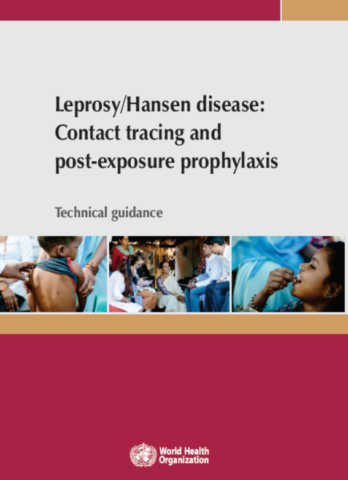
WHO technical guidance: Contact tracing and PEP

Experts and advisors associated with several ILEP members contributed to this newly released publication. It provides guidance on how to implement contact screening and chemoprophylaxis with single-dose rifampicin.

The contents are logically ordered: counselling and obtaining consent, identification and listing of index case, listing of contacts, tracing of contacts, screening of contacts, administration of prophylactic drugs. Managerial aspects to undertake contact screening and chemoprophylaxis are also elaborated, including planning, training, supervision and drug management.


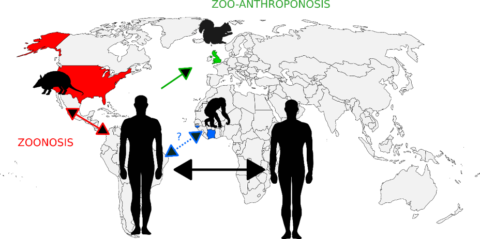
Leprosy in wild chimpanzees

Leprosy-like lesions were recently reported, and confirmed by laboratory analysis, in two populations of wild chimpanzees in Guinea-Bissau and Côte d’Ivoire. Whole-genome sequencing revealed that the chimpanzees are infected by different M. leprae strains: the genotype 2F in Côte d’Ivoire, and the genotype 4N/O in Guinea-Bissau. These genotypes are rare worldwide and in West Africa.

The exact source of infection remains to be determined, but the data suggest an unknown environmental reservoir. This is the first report of an animal reservoir for the leprosy bacillus in Africa. The research report questions the assumption that humans are the main reservoir of M. leprae and suggests that eradication of the disease should include a one-health approach.

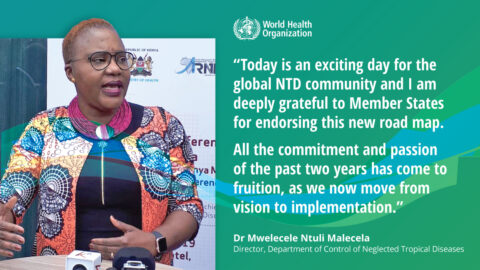
Ending the neglect: WHO NTDs Roadmap 2021-2030

Ending the neglect to attain the Sustainable Development Goals: a road map for neglected tropical diseases 2021-2030 was adopted by the World Health Assembly in November 2020. It had been drafted through an extensive global consultation that began in 2018.

WHO has issued an 8-page summary of the Roadmap which outlines the main global targets and strategies. The overarching targets are ambitious:

  • 90% reduction in people requiring interventions against NTDs
  • 75% reduction in disability-adjusted life years related to neglected tropical diseases
  • 100 countries eliminate at least one NTD
  • 2 NTDs are eradicated

Perhaps even more important are the cross-cutting targets, which come in four categories: integrated approaches, multi-sectoral coordination, universal health coverage and country ownership. An important principle is the shift from single-disease approaches to person-centred, integrated multi-disease approaches. For leprosy, which is one of the twenty NTDs, an especially important cross-cutting target is that, by 2030, 40 countries will implement integrated skin-NTD strategies. Also significant are the universal health coverage targets, which are that 90% of countries will include and budget for NTD interventions in their package of essential services, and 90% will have guidelines for management of NTD-related disabilities within national health systems.

We now have the consensus and the commitment of every country to work in an integrated, cross-cutting manner in tackling all the neglected tropical diseases” said Dr Ren Minghui, WHO Assistant Director-General for Universal Health Coverage, Communicable and Noncommunicable Diseases. “To do so effectively, and as drivers and beneficiaries, countries must change their operating models and culture to facilitate greater ownership of programmes. Smarter investments and high-level political commitment are required to reduce the social impact and economic consequences imposed by these diseases.”

Leprosy is one of the diseases targeted for elimination, in terms of interruption of transmission. This is a major advance from the previous, often misunderstood, target of ‘elimination as a public health problem’. The global target is that by 2030, the number of countries with zero new autochthonous leprosy cases will rise from 50 to 120.

The WHO NTD Roadmap 2021-2030 will be launched on 28 January 2021. The draft global leprosy strategy, which was the subject of a major consultation in October, aligns with the targets and principles of the NTD Roadmap, and will be launched at around the same time.

Survey by Alice Cruz, UN Special Rapporteur

The UN Special Rapporteur on the elimination of discrimination against persons affected by leprosy and their family members, Alice Cruz, is preparing her report to be presented at the 47th session of the UN Human Rights Council in June 2021. This report is about the disproportionate impact of COVID-19 on persons affected by leprosy and their family members and examines its root causes, consequences and the way to recovery.

Among some of the issues that she will cover on her report are:

  • lessons that can be drawn from leprosy’s history to the COVID-19 pandemic (such as its impact on mental health and stigmatization, but also good practices developed by the people and their representative organizations to respond to these issues)
  • the relation between access to work, to decent and safe working conditions and the sustainability of livelihoods
  • which strategies can efficiently tackle the disproportionate impact of the COVID-19 pandemic, but also ensure that individuals and communities living with leprosy and its consequences are included in recovery plans

The Special Rapporteur is very grateful for the cooperation of many organisations, including ILEP members, during these first 10 months of the COVID-19 pandemic. This has been crucial for her understanding of the ground situation in many of the endemic countries. She now kindly requests our further collaboration by a short response to two guiding questions about how ILEP member associations and partners have been supporting communities to improve their socioeconomic situation and to develop. The guiding questions are in English, French and Spanish.

Alice asks for short and precise answers (not more than 1500 words) but will be more than happy to receive information, especially ‘on-the-ground’ experience, in any format, or on other related issues. Responses should be sent to srleprosy@ohchr.org no later than 31 December 2020, using the email title: ‘Submissions to the Questionnaire.’

Global consultation with National Leprosy Programme managers, partners and affected persons on Global Leprosy Strategy 2021‒2030.

WHO is organizing a Global consultation with National Leprosy Programme managers, partners and affected persons on Global Leprosy Strategy 2021‒2030, this will be a virtual meeting held for 2.5 hours on four consecutive days (26-30 October).

To facilitate participation from different countries, the consultation will take place at two different times. Both sessions will have identical programmes, the ‘West’ session will cover Africa, Europe and the Americas, the ‘East’ session will cover Asia and Pacific.

The registration forms can be accessed here.

Written statement regarding impact of COVID-19 on persons affected by leprosy

ILEP summarised key concerns around COVID-19 and urged WHO and Ministries to work with leprosy program managers on safe and effective transition to the ‘new normal’ and innovative approaches to the continuum of care during ongoing pandemic.

Report on human rights situation of persons affected by leprosy in Sierra Leone

ILEP and one of its member associations supported this submission written by the National Association of Persons Affected by Leprosy in Sierra Leone to the 38th cycle of the Universal Periodic Review, with recommendations to address issues related to stigma and discrimination and  support persons affected by leprosy into employment, inclusion and independent living.

Report on human rights situation of persons affected by leprosy in Mozambique

ILEP partnered in this submission by three of its member associations and two organisations of persons affected by leprosy to the 38th cycle of the Universal Periodic Review, with recommendations to prevent ongoing social exclusion and provide adequate care to persons affected by leprosy in Mozambique.

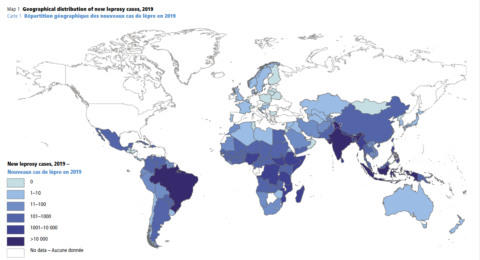
Global Leprosy Update 2019

Published in WER on Sept 4th, 2020. (WER 95:417-440)

Commentary by the ILEP Technical Commission, September 2020

This new update presents a large amount of helpful data on the present state of leprosy around the world, generally in Tables whose format we have become used to. An Editorial comment at the end gives further perspective.  The data themselves were received from 160 countries through the DHIS2 software or through an Excel-based form, which holds the promise of gradually improving consistency in the coming years.

The sub-title, “Time to step-up prevention initiatives” is the main focus of the Editorial comment on the last 3 pages, emphasizing the Triple Zero targets. Post-exposure prophylaxis (PEP) with single-dose rifampicin is mentioned as a WHO recommendation, but there are no process indicators in the report which would help to monitor progress.  There are many possible indicators, such as the number of countries with a policy to implement PEP, or the number of contacts who were given PEP.  Work is underway to estimate the population requiring PEP globally, so it would be worthwhile to start collecting data about how many people are receiving it. Along side PEP indicators, WHO also recommends monitoring trends in rifampicin resistance, which could theoretically be affected by PEP.

The main leprosy indicators are now all based on a denominator of 1 million population (1 million children, in the case of rates in children) and this standardization is welcome; it also helps to suggest that calculating these indicators for small populations may be misleading.  The key indicators are the case detection rate, the disability rate and the case detection rate in children.  The rate in children is declining gradually (7.78 per million children in 2019) and the 2030 target is to be below 0.8 cases per million children: this will be a challenge, but the indicator seems robust and helpful; it remains our best estimate of recent transmission.  The main problem with the figure of 7.78 per million children is that it conceals a very wide range of results for individual countries and regions (See Table 1 below). It would be useful to see this rate presented in future for each of the 23 global priority countries, with trends over time. Larger countries may also find regional trends useful in identifying areas of higher endemicity.

Table 1: Case detection rate (CDR) in children for 23 priority countries, per million children.  For countries with < 1m children, the exact rate is not calculated, but it is very high.  Data are taken from Table 5 of the Global Leprosy Update for 2019. The CDR is calculated from the first two columns of data (b/a).

Country a. Child population (millions; 2019) b. Child leprosy (2019) CDR in children (=b/a)
1 Angola 12.985 116 8.93
2 Bangladesh 45.318 210 4.63
3 Brazil 45.762 1545 33.76
4 Comores 0.305 270 > 100
5 Côte d’Ivoire 9.723 44 4.53
6 Dem. Rep. of the Congo 34.659 158 4.56
7 Egypt 30.716 26 0.85
8 Ethiopia 42.075 507 12.05
9 India 370.183 7859 21.23
10 Indonesia 70.601 2009 28.46
11 Kiribati 0.037 37 > 100
12 Madagascar 9.996 96 9.60
13 Micronesia (Federated States of) 0.035 46 > 100
14 Mozambique 12.156 211 17.36
15 Myanmar 14.429 105 7.28
16 Nepal 8.876 293 33.01
17 Nigeria 77.616 276 3.56
18 Philippines 32.767 99 3.02
19 Somalia 6.326 35 5.53
20 South Sudan 4.12 120 29.13
21 Sri Lanka 5.075 176 34.68
22 Sudan 15.913 13 0.82
23 United Republic of Tanzania 22.712 53 2.33

The Grade 2 Disability (G2D) rate is gradually declining, but it is questionable whether the 2020 target of < 1 per million population will be met.  In Table 4 it would be helpful to add one line at the bottom, below the total new cases with G2D, giving the rate per million.  Small changes from year to year are less significant than longer term trends, but the increasing number of new cases with G2D in Brazil over the past 5 years, as shown in Table 4 of the Update, is a concern.  Although the Covid pandemic of 2020 does not affect these 2019 data, the capacity of health services to provide an acceptable level of care to those in need may be impaired in the coming years.

There are sparse data available for several issues that are mentioned briefly. Antimicrobial resistance (data from 11 countries), reactions (19,590 cases in 41 countries), adverse events related to MDT (none reported), foreign-born cases (836 individuals in 37 countries, of which 11 countries had no indigenous cases), relapse (3893 cases) and retreatment (15,517 cases). It is commendable that these data are now being collected and in future, it will be interesting to watch historical trends and to analyze individual country data in more detail. As almost 80% of all retreatment cases were reported from Brazil and India, it is vital that monitoring antimicrobial resistance is reinforced in those countries.

The number of countries with discriminatory laws was 22 despite recent efforts.  In the field of psychosocial support to people affected, new indicators are needed, but the relevant data may be difficult to collect.  Access to effective counseling is one area that could be monitored.

There are a few typing errors: in Table 2 the 2019 figure for cases with G2D in SEA is written as 817, but it should be 4817, as indicated elsewhere in the report.  In Figure 2, the legend describes the chart as depicting trends in the case detection rate among children, whereas it actually shows the numbers of cases, not the rate; the description of Figure 2 in the text is correct. In the last paragraph on p424, the first sentence seems to be incomplete.

In conclusion, the update presents a wealth of data which will be useful to policy-makers, planners and researchers everywhere.  The emphasis on stepping up preventive activities is welcome.  Data allowing anyone to calculate the CDR in children in any country, is useful to indicate the underlying level of ongoing transmission, but in future, indicators to monitor the implementation of PEP will be needed.  Data on issues such as drug-resistance, reactions, relapse, retreatment and adverse events are being collected, but at present are not complete enough to draw meaningful conclusions.  The basic indicators on disability (G2D rate, and the rate in children) and discrimination (remaining discriminatory laws) should be complemented by indicators that monitor both disability management and steps being taken to reduce stigma, at community level, as proposed in the Global Leprosy Strategy 2021-2030.

Written statement regarding impact of COVID-19 on persons affected by leprosy

ILEP summarised key concerns around COVID-19 and urged WHO and Ministries to work with leprosy program managers on safe and effective transition to the ‘new normal’ and innovative approaches to the continuum of care during ongoing pandemic.

Renewal of mandate of UN Special Rapporteur

The UN Human Rights Council has renewed Alice Cruz’s mandate as UN Special Rapporteur on the elimination of discrimination against persons affected by leprosy and their family members, for a further three years. ILEP has been active in support, and we appreciate very much the leadership of the Japanese Permanent Mission in Geneva in sponsoring the extension.

The 3-year mandate now includes reporting to the UN General Assembly, as well as to the Human Rights Council. This is a significant step forward, reaching a wider audience of political leaders and policy makers for messages and reports about discrimination and denial of rights of persons affected by leprosy.

Ms Cruz’s most recent report includes a policy framework to help countries develop rights-based action plans for eliminating discrimination on the grounds of leprosy. This builds on the Principles and Guidelines for the elimination of discrimination against persons affected by leprosy and their family members which were adopted by the UN a decade ago. The policy framework is designed to be implemented within already existing national human rights policies and programmes. There is concrete guidance on four main areas: adequate standard of living, non-discrimination and inclusion in the community, elimination of stereotypes, and empowerment with a focus on vulnerable groups.

ILEP values the empowering effect Alice Cruz’s mandate has had on persons affected by leprosy and their family members, and the organisations that represent them. We look forward to working with her in increasing cooperation over the coming years.

Statement in support of Special Rapporteur – Leprosy presentation to Human Rights Council

ILEP supported the framework for inclusion recommended in the presentation of Alice Cruz to the Human Rights Council and urged renewal of her mandate as Special Rapporteur.

Report on the situation of women affected by leprosy in Indonesia

ILEP supported this submission by 14 organisations in Indonesia to the  78th pre-session of the CEDAW Committee. It proposes a series of government actions to promote the rights of women affected by leprosy in Indonesia within the CEDAW framework.

People Affected by Leprosy and the COVID-19 Global Crisis

People affected by leprosy have been deeply impacted by the crisis generated by the COVID-19 pandemic. A working group of the Global Partnership for Zero Leprosy (GPZL) entitled Emergency advocacy for persons affected by leprosy hosted regional calls with 19 organisations of persons affected, as well as individuals, to gather their perspectives on their needs and challenges during the COVID-19 health crisis.

The working group found that, across geographies, some major concerns were consistently being talked about. These included access to health care, access to basic goods like food, clean water and soap, access to government support, access to stable livelihoods, access to information about COVID-19, and the impact of situations where the vulnerability of persons affected by leprosy is made worse by other vulnerabilities such as age, gender, stigma and mental health issues.

This month the working group has issued a comprehensive report which provides a depth of insight into these concerns, and includes a set of ten recommendations that NGOs and governments can take to address the needs and challenges of persons affected during the COVID-19 pandemic.

Particularly pertinent to ILEP members are recommendations about supporting grassroots organisations of persons affected in the COVID-19 context, supporting coalitions of grassroots organisations to elevate their voice, working with them to map the disproportionate impact of COVID-19 and available solutions and resources, and liaising with National Leprosy Programmes to ensure access to the continuum of care for persons affected, including access to leprosy reaction treatment, and the resumption of wound care services and self-care groups as soon as possible.

Report on the stigma and discrimination faced by persons affected by leprosy in Myanmar

ILEP supported this submission by one of its member associations and a civil society organisation in Myanmar to the 37th cycle of the Universal Periodic Review, containing recommendations to prevent ongoing social exclusion and boost the inclusion of persons affected by leprosy in Myanmar.

Report on the human rights status of persons affected by leprosy in Nepal

ILEP partnered in this submission to the 37th cycle of the Universal Periodic Review of recommendations to prevent ongoing social exclusion and stigmatisation of persons affected by leprosy in Nepal.

Open letter to Italian Foreign Minister

Organised by an informal, global network of people affected by leprosy.


Dear Minister,

As persons who have experienced Hansen’s disease, more commonly known as leprosy, we were disheartened to read international media reports today that quote you as calling on other nations to not “treat Italy as a leper colony due to coronavirus”. Other national and international leaders have used similar language in high profile speeches over the past.

While it might be good at grabbing headlines, the use of ‘leprosy’ as a negative metaphor has consequences far beyond the political realm, because it perpetuates old and outdated stereotypes and reinforces stigma and discrimination against us, individuals affected by leprosy.

Leprosy is not a disease of the past. More than 200,000 persons are diagnosed each year with leprosy, and there are believed to be more than two million individuals affected by leprosy who are undiagnosed and untreated. Negative social attitudes towards persons with leprosy create a barrier to treatment, and hinder efforts to stop the transmission of the disease globally.

Leprosy is a curable disease. However, individuals affected by this disease are still marginalized and excluded in many places around the globe. We ourselves have experienced being isolated by family and friends, fired from jobs, discriminated against and insulted by people, and many other violations of our human rights. That’s why we work hard every day to change this reality in every community.

Persons affected by leprosy are people with hopes and dreams like everyone else. Most individuals affected just dream of a normal life: A place to live and work peacefully, surrounded by their family and friends. They do not want to be defined by their disease.

The COVID-19 pandemic has been devastating to many, but has particularly impacted individuals affected by leprosy. This has been detailed in a letter by the UN Special Rapporteur on the elimination of discrimination against persons affected by leprosy and their family members, Alice Cruz, a human rights leader who has also denounced the misuse of leprosy as a metaphor.

It is fundamental to ensure that the word leprosy is always used without the burden of stigma. Some countries have taken the initiative to change the name of the disease. However, while such change has not taken place all over the world, public figures and authorities have the duty to be careful with the thousands of persons affected and the millions that have had their lives impacted by this disease worldwide.

We therefore respectfully ask you to not use leprosy as a negative metaphor, and to instead support people in Italy, Europe and around the globe fighting to stop discrimination against individuals affected by leprosy.

We believe that this form of discrimination against us was not the objective of your statement, yet that’s the effect it has had on us. Confident in your good will, a few of us would be happy and honored to meet with you and discuss this issue further.

In the name of persons affected by leprosy around the globe,

Organizations and groups of persons affected by leprosy:

HANDA (China)

IDEA Nepal

PERMATA (Indonesia)

Sam Utthan Apal Bihar (India)

FELEHANSEN (Colombia)

HEAL Disability Initiative (Nigeria)

IDEA Ghana

Morhan (Brasil)

Purple Hope initiative (Nigeria)

IDEA Nigeria

ENAPAL (Ethiopia)

APAL (India)

Comunidad de Apoyo (Paraguay)

Comunity of people affected by leprosy in Rajasthan (India)

IDEA Refaco (Kenya)

ILEP Panel of Women and Men affected by Leprosy

Global Leprosy Champions

IDEA INTERNATIONAL

Persons affected by leprosy:

Evelyne Leandro

Lilibeth Nwakaego Evarestus

Rachna Kumari

Jayashree P Kunju

L H Subodha Galahitiyawa

Amar Timalsina

José Ramirez

Mathias Duck

Mohan Arikonda

Ganesh Muthusamy

Sathya Arikonda

Linda Lehman

Braj Kishor Prasad

Sanjay Kumar

Anand Raj

Lucrecia Vazquez

Mainas Ayuba

Kofi Nyarko

Paula Brandao

Suresh Dhongde

Yurani Granada Lopez

Sofia Castañeda

Isaias Dussan

Felicita Bogado

Jimoh Hammed

Joshua T. Oraga

Dan and Babs Izzet

ILEP/NNN Guides on Stigma and Mental Wellbeing

ILEP Members and supporters care about stigma and discrimination. So we are proud to announce the launch of the all-new ILEP/NNN Guides on Stigma and Mental Wellbeing.

The Guides have been comprehensively rewritten to incorporate improved insights, align with current evidence, and make mental wellbeing an integral component of the series. They provide best-practice information and recommendations from various disciplines on how stigma manifests, how it can be reduced and the tools available to assess the experience of stigma and its effects on mental wellbeing. Although they focus on NTDs, the Guides are relevant for people working to address all forms of health-related stigma and promote mental wellbeing in their interventions, policies, trainings, care packages, evaluations or other services.

The complete series:

  • What are health-related stigma and mental wellbeing? provides basic information about stigma and its causes and manifestations.
  • How to reduce the impact of stigma, presents coping mechanisms for individuals and families at risk of stigma and provides practical tools for those who are working with them.
  • How to reduce sources of stigma, focuses on interventions that can tackle the different sources of stigma in contexts such as the community, the health sector, service providers, institutions, law and policies and the media.
  • How to assess health-related stigma and mental wellbeing, explains why it is important to assess stigma and mental wellbeing and describes qualitative and quantitative assessment methods and instruments. It also explains how to interpret and report the assessed findings.

Management of leprosy reactions and prevention of disability

The World Health Organisation has issued new Technical Guidance on management of leprosy reactions and prevention of disability. The guidance originated in an informal consultation in late 2018 where numerous ILEP technical specialists were involved.

The Technical Guidance provides updated and detailed guidance on critically important actions to prevent disability. Main chapters include:

  • Distinction between the different types of leprosy reaction – how they present, how they are managed and the potential consequences if not managed well
  • How to assess nerve function and undertake sensory testing and voluntary muscle testing, so as to recognise nerve damage as early as possible
  • How to recognise early, and correctly treat, leprosy reactions and neuritis, so as to avoid irreversible nerve damage and the resulting disability. There are separate chapters for the medical management and for front-line health workers, including a useful step-by-step guide

A feature that users may find especially useful is a set of flow-charts, or algorithms, towards the end of the publication, which are a visual guide to making the right clinical decisions.

COVID-19 and people with disabilities

People with disabilities are being left behind in the global coronavirus response. Many are elderly or have underlying medical conditions that make them more vulnerable to the virus. But they may also be forgotten about in responses such as lock-downs, or in the supply of information.

A two-page statement was brought by the International Disability and Development Consortium (IDDC) and the International Disability Alliance (IDA) to the May 2020 World Health Assembly. It asks the world to ensure that there are no obstacles to persons with disabilities accessing health care, that there is attention to ensuring that communication messages actually reach persons with disabilities, and rehabilitation, psychological support and other services continue to operate, safely.

A Disability-inclusive Response to COVID-19 is a more detailed, and very informative, United Nations policy brief. It describes how COVID-19 affects persons with disabilities and how to achieve a disability-inclusive response and recovery. It recommends four over-arching areas for action during the COVID-19 response and recovery:

  • Ensure mainstreaming of disability throughout, together with targeted actions
  • Ensure accessibility of information, facilities, services and programmes
  • Ensure meaningful consultation with and active participation of persons with disabilities and their representative organizations in all stages
  • Establish accountability mechanisms to ensure disability inclusion in the COVID-19 response

For a quicker overview, this Devex article quotes practitioners who recommend four practical and direct ways to make sure that responses to COVID-19 are disability-inclusive:

  • Include organisations of persons with disabilities in recovery planning
  • Make information accessible, especially for those with vision or hearing impairments
  • Ensure people with disabilities are not excluded or discriminated against by health services
  • Ensure access to all other services, using creative means when necessary

Open letter to UN member states

People affected by leprosy are among the furthest behind and are experiencing the disproportionate impact of the crisis generated by the COVID-19 pandemic. Alice Cruz, UN Special Rapporteur on the elimination of discrimination against persons affected by leprosy and their family members, has written an open letter to UN member states urging a constructive response.

Ms Cruz has gathered a considerable body of evidence about the barriers that people affected by leprosy are experiencing in terms of access to leprosy healthcare, social protections, and basic supplies (such as food, energy for cooking, clean water, soap and PPE equipment). There are particular concerns for older people living in the former leprosy colonies.

Ms Cruz outlines five fundamental principles which should guide states’ medium- and long-term responses to the crisis:

  • Strengthen health systems and ensure continuous access to leprosy health-care programs
  • Expand the scope of national leprosy-related programmes to include targeted action on the social determinants of leprosy
  • Implement comprehensive social protection policies that guarantee full accessibility to persons affected by leprosy as well as poorly educated populations and those living in remote areas
  • Build up grassroots organisations of persons affected by leprosy, as one way of ensuring that relevant information about COVID-19 or similar emergencies reaches all people
  • Work as international partners to support the investment needed for the elimination of leprosy, and the right to the highest standard of physical and mental health of persons affected by leprosy, and the promotion of leprosy related human rights policies

How transformational digital technologies can contribute to Leave No One Behind in UHC: the case of rare diseases

  1. ‘Rare diseases’ are ones not often seen by doctors, therefore not diagnosed and not properly treated. They affect around 400 million people worldwide. 400 diseases represent 98% of these cases, with a further 5,600 diseases making up the other 2%. Clearer definitions are needed.
  2. As the distance between patients and health centres increases, quality of life and life expectancy decrease. Digital technologies could help by making distance irrelevant through virtual visits.
  3. Dr Soumaya Swaminathan (Chief Scientist WHO) outlined how her division looks at new technologies, gathering evidence on emerging treatments and new technologies to see where and how countries could invest in new technologies to improve health outcomes. The vision is a global framework for rare diseases, with cloud-based data solutions, apps which identify patterns and create algorithms and accelerate diagnosis based on symptoms, social platforms where people living with rare diseases and specialised doctors can connect with each other, produce a rare disease encyclopaedia in various languages.
  4. People with rare diseases and their families often experience isolation and are stigmatised in various issues including healthcare, insurances, education, social care and employment. Technology can help overcome isolation by building digital platforms to connect patients with specialists, support and expand existing networks, and allow patients to virtually participate in classrooms. Artificial Intelligence would allow symptoms to be mapped and grouped, so people are provided with accurate diagnoses. The opportunities and benefits of digital technologies should be maximised by combining efforts.
  5. A panel session identified challenges and opportunities in digital health implementation:
  • Self-testing/self-diagnosis become possible in diseases of high stigma
  • This can be followed by treatment in the community rather than at the health centre
  • Change management in the workforce is needed before the introduction of technology, especially in low and middle income countries, as it is a new form of thinking
  • National digital health strategies are needed rather than piecemeal development or application